Wednesday, August 10, 2011

Ludlow – 7 August 2011


As we have travelled around England, we've seen many wonderful historical towns, with exciting looking old Tudor or other era buildings, and often said 'it would be wonderful to come back and stay there'. This weekend we actually did this for the first time.

Ludlow has always stuck in our mind as one of the most beautiful towns in England. A guidebook said it had the most Michelin Stars per head of population outside of Paris. (We don't believe that however, as Bray is smaller and has 3 times as many Michelin stars.) We booked into the Feathers Hotel, one of the most beautiful Tudor buildings in the town and when we checked in, we discovered they had upgraded us to the honeymoon suite, so our plans for a special weekend suddenly got better.

We set out for Ludlow, stopping off at Deerfield, a tiny town which has two pre-Norman churches. The oldest is from Saxon times, 'lost' for years as a house was built onto and “over” it.

Tewkesbury is another stunning town, with a huge Abbey, and streets of wonderful old buildings.

North again we visited Spetchley Park Gardens. These were not at their best for borders, but had many wonderful roses, all labelled, so we noted some which looked and smelt the best. The church on the estate is definitely worth a visit, with a very elaborate tomb near the altar.

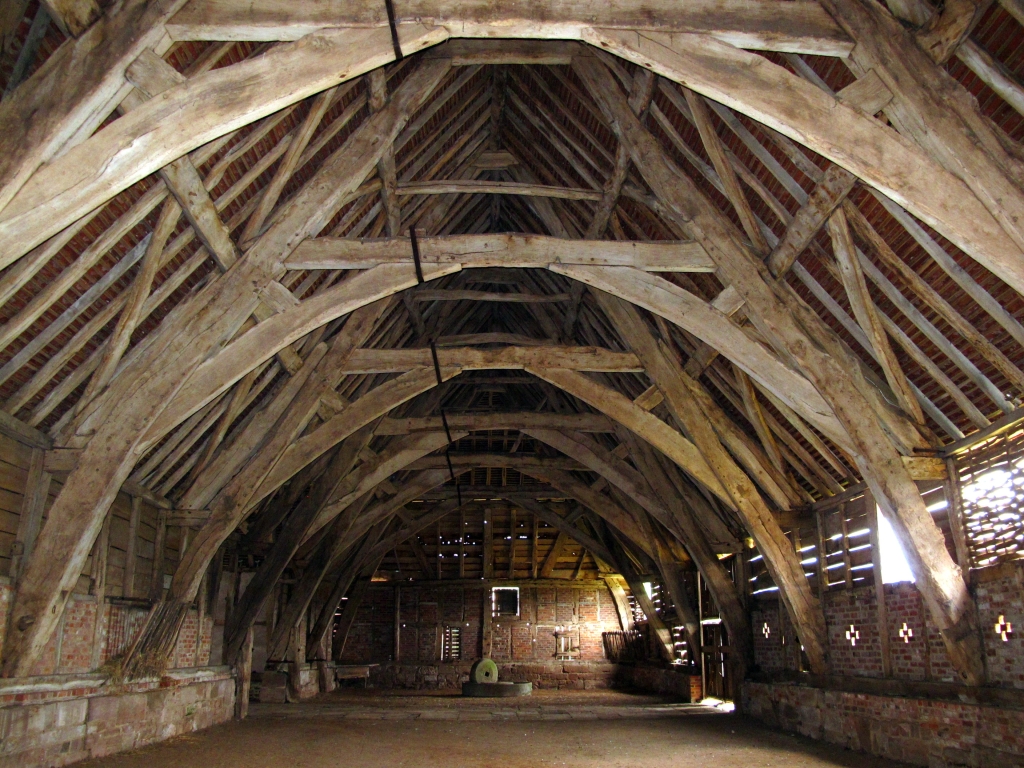
Our next exciting find of the day was marked on the map as a tithe barn. This turned out to the oldest cruck-framed barn in the UK. It is an amazing structure, with each huge floor to roof cruck beam is one continuous piece of an oak tree, selected and felled for its special shape.

Before reaching Ludlow, we stopped at Berrington. This palladian stately home gives a look at how life in the country used to be. The entire house is open for viewing, and affords a very comprehensive look at the roles of the servants below stairs.

Sunday is the day for an antiques market in the Ludlow castle square. We browsed the markets, walked down to the river and the silk mill, and then visited the castle. The castle dates back to Norman times, but is now just a ruin, with several towers which can be climbed. We enjoyed wandering around it in the sunshine and seeing the rare circular Norman chapel.

Random Roaming – 6 August 2011

A long weekend away from London was the plan for the weekend, with no fixed ideas of where to go. But high on our list of towns to stay in is Ludlow, on the Welsh border. To break the journey, we spent Saturday night near Gloucester.

Today's travels took us to villages on the east and west banks of the River Severn. First up was a garden at Westbury-on-Severn. Westbury Court gardens are rather special as they were left to deteriorate, when anyone of note was replacing their 18th century gardens with the latest look by Capability Brown. The gardens have been restored by the National Trust, and are a wonderful place to visit, with a real air of by-gone eras. Then onto lunch at Newent, a wonderful town, with timber buildings and a market house building on stilts.

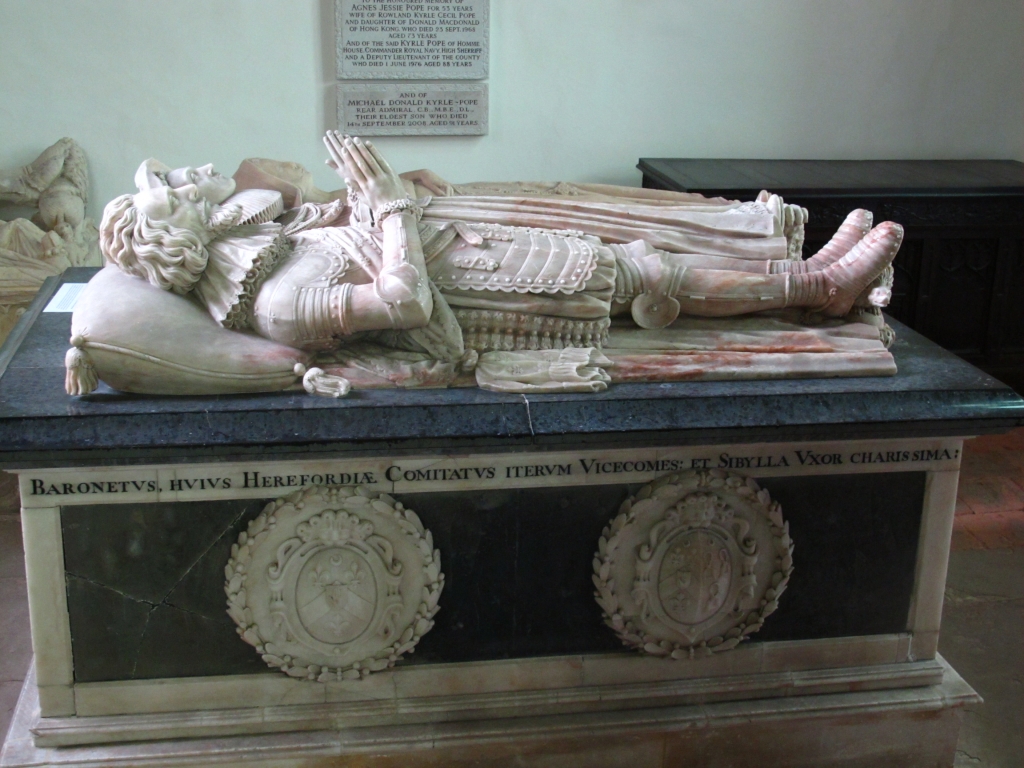
North west took us to Kempley Church, with it's Roman arch architecture and medieval wall paintings. The next village has a medieval knight on his tomb but, unusually, he is carved from oak and further down the church are some somewhat newer relations of his, resplendent in marble, resting for all time in a private chapel.

The Malvern Hills were next and onto Upton-on-Severn This is an even bigger market town than Newent and very attractive

We ended the day at the Gloucester Docks, which have been redeveloped into apartments, cafes and an Arts and Crafts centre. Here we finally purchased a hand crafted glass bowl.

Years ago we saw a glass dish in an arts centre in Painshill. We were very taken with it, but walked away. Then at the Gloucester Cathedral floral festival, we met the artist, and he had some similar dishes for sale there. But the dish we had seen was dramatic in black and white. He had only made three of this style. One had been sold, one was in his rural studio, and one in Gloucester. During our day out, we called by the studio in a tiny rural community, far from the main roads. We arranged to meet him at The Docks at the end of the day, to make our selection from his two remaining dishes. The Docks area is worth a visit in it's own right, but we had double pleasure, as we came away with a memory to commemorate our 'Gloucester connection'.

Monday, August 01, 2011

Battle Proms – 30 July 2011

Battle Prom is a series running through the summer, just like a traditional Proms in the Park, with a few extras thrown in. The Proms are being held at many major historical houses, within a couple of hour's drive from London. We choose Highclere Castle, after seeing it on the Downton Abbey historical drama series. It proved to be an excellent choice, as the weather was perfect. Compared with recent Saturday nights this summer, we were exceedingly fortunate, as we had a perfectly fine and mild summer evening.

Ngaire and Stuart came with us, and we combined the trip there with an AA circular tour centred on Newbury. On the way there, we did the northern half of the route, which left the M4 motorway, and wove under and over the M4, as it explored the lovely little villages of Yattendon, Peasmore and Boxford,

Yattendon has a great Pub, with a really lovely garden, where we relaxed in comfy chairs under a grape arbour, and enjoyed a coffee.

Coffee was nearly our undoing, as we enjoyed another, after checking into our Travelodge (booked using their summer special at only £15 – a perfect compliment to our Proms just a few miles down the road). But although we left there in plenty of time, we joined a queue stretching 2 miles from the Castle, and it just wasn't moving for long periods. A nail-biting 90 minutes later, the queue finally started to move, and we arrived 30 minutes before the 'calvary charge', which opened the programme.

It was virtually impossible to see the cavalry charge, due to the 7,000 other people there, but we did manage to see the riders over the heads of the spectators, as well as on the big screen.

The next highlight was a Spitfire, piloted by a women who does stunts in her husband's plane, after he was killed in a car crash. She was brilliant, doing loops and rolls all synchronised to the music being played by the orchestra..

The programme followed a typical mix of favourite classics, such as the Sailors Hornpipe and 1812, accompanied by 70 field guns. The 'battle' accompanying Battle Symphony was most realistic with plenty of atmospheric red smoke from the cannons and fireworks.

The evening finished with the traditional favourites of Jerusalem, Rule Britannia and Land of Hope and Glory, accompanied with a magnificent fireworks display, they even had more fireworks prepared for an encore.

We expected the exit to be as slow as the entry, but were pleasantly surprised by a smooth and swift return journey.

On Sunday we experienced the queues at Highclere again. As it is open to the public on Sundays, we had planned to visit. On the way we stopped by the ruins of Donnington Castle and the Sandham Memorial Chapel. This is a very moving place to visit. This consecrated church is was built after WW1, by friends of Stanley Spencer, so he could paint his war experiences as a medical orderly, as a type of therapy. These have recently been cleaned, and the murals are so vivid, you feel they have just been painted.

On to Highclere, only to find long queues at the ticket office, so time for a change of plan. After completing our circular AA tour, from Newbury to Buckleberry (sounds like something from Middle Earth), we headed for the nearby Thames, and enjoyed a lunch on the terrace of The Swan, overlooking the Thames, with the pleasure boats out enjoying the warm summer day.

Wednesday, July 27, 2011

The Gardens Royal – 24 July 2011

After the Royal Palace yesterday, we extended the theme today with two Royal Gardens.

We had a 2 for 1 coupon for the Savill Gardens for the month of July only. Fortunately, after all the rain this week, Sunday was a beautiful day, ideal to make use of this.

Savill Gardens are named after Sir Eric Savill, ranger at Great Windsor Park, who obtained permission from George V to turn a waste land corner into a garden, and that was the beginning of Savill Gardens. The summer borders were stunning, as was the new rose garden, with an elevated walkway, to smell the especially chosen fragrant blooms.

Morning tea in their new stunning pavilion was a must. The old pavilion had been removed, which made way for a special New Zealand Garden. The idea was germinated from the gift of plants to the Queen from New Zealand.

Following the visit to this royal garden, we then made use of our membership to again visit Wisley Gardens and see how their summer borders looked. We spent even longer at Wisley, as the gardens were absolutely stunning. Our favourite had to be the new Bowes-Lyons rose garden. It was so much more than a rose garden, beds of vibrant flowers complemented the roses.

We finally dragged ourselves away from Wisley, and checked out the church in Wisley village. This old 12th century church is simple, yet timeless and quite moving to think of all the lives who have been involved in it's history.

Just down the road is The Anchor pub, on the Wey Navigation. The pub was chockka when we arrived, but we had come armed with a 4 mile walk designed to be done in conjunction with a visit to the pub. By the time we had completed this, there was a smaller queue for tables, and we enjoyed a delicious salad beside the canal. British summer at it's best!

Royal Garden Party – 23 July 2011

'The Dress' dominated news broadcasts, at the time of the Royal Wedding in May. When we visited Buckingham Palace last August, and had our tickets converted into an annual pass, we didn't even know there was going to be a royal wedding. So to learn the dress was going on display at the Palace summer opening, was a bonus.

We planned to meet David Smith at the Palace, but before then, we decided to complete the Grosvenor Estate walk that we had to abandon last Palace visit, because of rain. The Grosvenor Estate is recognised as the largest and best preserved Regency estate in Europe. There is a real mixture of top quality housing, once the residences of aristocracy, side streets occupied by tradesmen (we saw an old time motor repair garage still operating) and even experimental social housing.

The mix still applies, as the social housing is still there, and the best streets still have private residences, even including Lady Thatcher with an armed policeman outside.

The Palace is, of course, stunning and we enjoyed the chance for a second visit on our tickets, purchased last year. This year the special exhibition was the royal collection of Faberge. The display was amazing, and certainly far more than we have seen previously. The wide range of objects made was intriguing, even a kiwi.

The Dress was fascinating to see up close, and the welcome chance to sit and watch a video about it's design, was great too. We also enjoyed seeing reproductions of the wedding photos, displayed in the Throne Room, where they were taken.

Lunch of course had to be at the pavilion just outside the Palace, beside the large lawn used for garden parties. As we left, we were approached by an ITV reporter, and asked our impressions of The Dress. But unfortunately we didn't appear on the news clip that night.

Monday, July 18, 2011

Floral Feast – 17 July 2011

Gloucester Cathedral is one of our favourite cathedrals. Not only is there the family connection with Bishop Hooper, the tomb of William the Conqueror's eldest son always fascinates us, the massive pillars and elegant cloisters are a wonderful mixture. This was all enhanced this week with the cathedral's Floral Festival.

We had planned this weekend away to fit in with the festival, and it turned out to be even better than expected. The advertisement that encouraged us to attend told about a floral carpet which filled the aisle, but in fact there was so much more. The whole cathedral was filled with floral arrangements from groups all around the area. The ticket suggested allowing two hours to see it all, and this was certainly required.

The morning had started with heavy rain, but by the time we finished the floral festival, the sun had come out and we were able to enjoy the rest of the day in sunshine.

Southwest of Gloucester is the lovely property of Rodmarton Manor. The house is relatively new, having been built in 1909. It took 20 years to build, and was made by local craftsmen using local materials and traditional methods. The effect is that of a much older house, quite simple and quite special.


The garden is advertised as one of the finest in Gloucestershire, and that's not a false claim. We really enjoyed the variety of garden styles, the colourful borders, the formal clipped trees and old fruit trees. It was a garden to inspire budding gardeners.

The trip back to our hotel was through a variety of lovely Cotswold villages, all just as lovely as Wroxton, the village we are staying in.